
What if your new air conditioner cools the house quickly but still leaves it feeling sticky? Choosing a system for Lakeland air conditioning involves more than picking a tonnage from a square-footage chart. Florida’s heat and humidity make sizing, airflow, efficiency, and moisture control especially important. Here’s what homeowners should examine before replacing or upgrading a system.
What Should You Look For in an AC System?
The best system starts with the home, not a product brochure. A proper cooling-load assessment considers factors such as floor area, insulation, windows, orientation, occupancy, and the building envelope.
That matters because two homes with the same square footage can have very different cooling requirements. A shaded, well-insulated home may need substantially different equipment from a sun-exposed house with older windows.
The U.S. Department of Energy recommends using recognized load calculations rather than simple rules of thumb when sizing HVAC equipment.
Don’t Choose Capacity by Square Footage Alone
Tonnage is important, but bigger is not automatically better.
An oversized air conditioner can reach the thermostat setting quickly and shut off before running long enough to remove sufficient moisture. DOE research links oversized HVAC equipment with reduced efficiency and increased indoor humidity.
For a Lakeland home, that distinction can be noticeable. A house may feel cool according to the thermostat while still feeling damp or uncomfortable.
A properly sized system should match the home’s actual cooling load as closely as practical. Ask for the basis of the sizing recommendation rather than accepting a capacity simply because it has always been used in the home.

How Do SEER2 Ratings Affect Your Choice?
SEER2 measures seasonal cooling efficiency, so it is useful when comparing equipment. However, the highest available rating is not automatically the right financial choice for every household.
| Factor | What to Consider |
|---|---|
| SEER2 | Seasonal cooling efficiency |
| System capacity | Whether the equipment matches the home’s cooling load |
| Compressor type | Single-stage, two-stage, or variable-capacity operation |
| Humidity control | Ability to maintain comfortable indoor moisture levels |
| Ductwork | Condition, sizing, airflow, and leakage |
| Installation | Proper matching, charging, airflow, and commissioning |
The DOE notes that installation problems such as oversizing, improper refrigerant charging, and leaky ducts can reduce efficiency and comfort.
For additional guidance on efficiency criteria and certified equipment, homeowners can consult the ENERGY STAR air-source heat pump criteria.
Why Humidity Control Matters in Lakeland
Temperature is only half of the comfort equation.
In a hot-humid climate, an air conditioner also needs to remove moisture from indoor air. A system that runs for extremely short cycles may satisfy the thermostat without providing enough dehumidification.
This is one reason variable-capacity or multi-stage equipment can be worth discussing. Rather than operating only at full capacity, these systems can adjust output in response to the home’s demand. The appropriate choice still depends on system design, controls, ductwork, and budget.
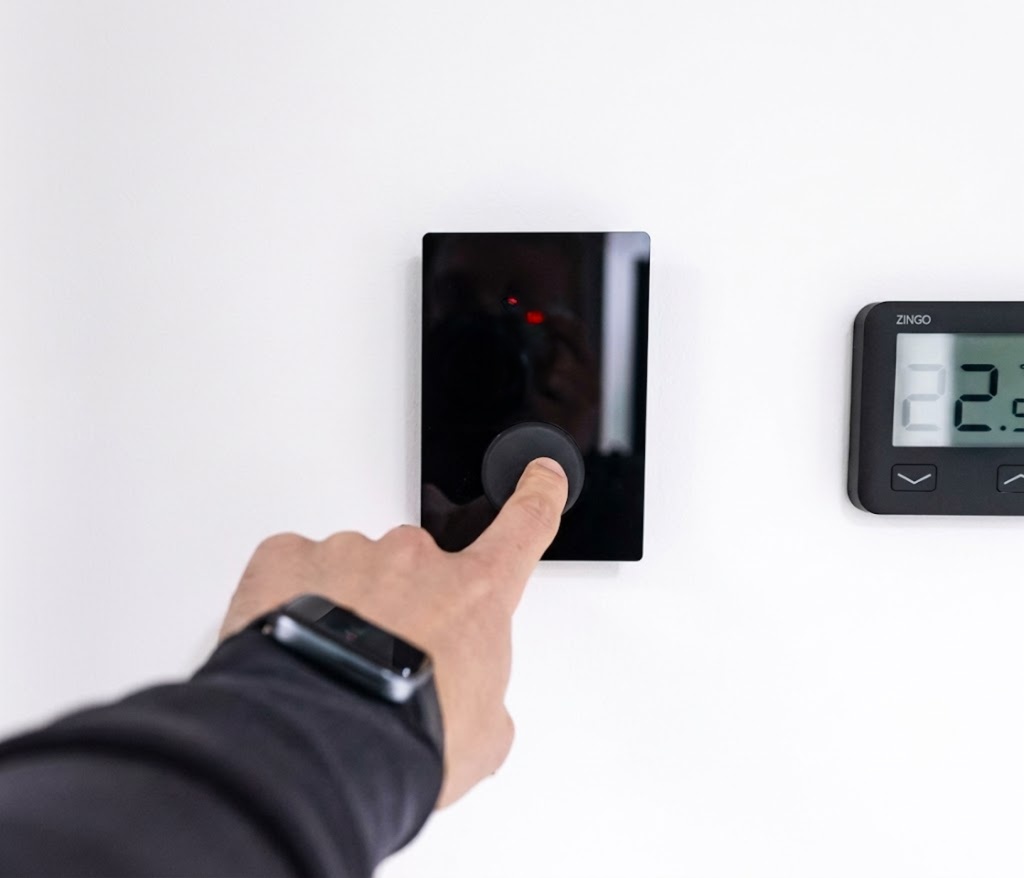
Don’t overlook the thermostat, either. Advanced controls can provide better management of temperature and humidity when matched correctly with the equipment.
How Do I Choose the Best Air Conditioning System for My Home in Lakeland?
Start by looking at the whole system rather than one specification.
Consider these questions:
- What is the home’s actual cooling load?
Ask how the recommended capacity was determined.
- How important is humidity control?
If the home often feels damp, discuss equipment and controls designed for better moisture management.
- Are the ducts in good condition?
Existing duct problems can undermine the performance of new equipment.
- What efficiency level makes financial sense?
Compare expected operating costs with the upfront price difference.
- What type of compressor fits the home?
Single-stage, two-stage, and variable-capacity systems have different operating characteristics.
A Better Way to Compare Your Options
Instead of asking, “Which AC has the highest rating?” ask, “Which system fits this particular house?”
That change in perspective can prevent an expensive mismatch.
For example, a homeowner who spends much of the day away may prioritize controllability and scheduling. A family that spends most of its time at home may place greater emphasis on steady temperatures, quiet operation, and humidity management. Someone planning to remain in the property for many years may also evaluate long-term energy use differently from someone planning to move soon.
There is no universal “best” system. The better question is which combination of capacity, efficiency, controls, airflow, and installation quality suits the home’s conditions and the household’s priorities.
Where Can Lakeland Homeowners Get Help Choosing a System?
After evaluating capacity, efficiency, humidity control, ductwork, and installation requirements, professional guidance can make the final decision easier.
Snowbird Heating & Cooling provides air conditioning services for homeowners in the Lakeland area. Its Lakeland air conditioning service page provides a starting point for homeowners researching their cooling options.
The goal should be a system that fits the home rather than simply choosing the largest or most heavily marketed unit.
Key Takeaways
- The right AC system depends on more than your home’s square footage. Cooling load, insulation, windows, ductwork, humidity, and household habits all affect the decision.
- Oversized equipment can cool rooms quickly but may cycle too often and remove less moisture.
- Compare efficiency ratings, system features, installation quality, and long-term operating needs rather than focusing only on the equipment’s purchase price.
- For Lakeland homeowners, humidity control deserves as much attention as temperature control.
Frequently Asked Questions:
Is a larger AC system better for a Florida home?
Not necessarily. Oversized equipment can cycle frequently and may provide less effective humidity removal. Proper load calculations are more useful than choosing capacity based solely on square footage.
What does SEER2 mean?
SEER2 is a seasonal cooling-efficiency measure expressed as the total heat removed during the cooling season divided by electrical energy consumed.
Should existing ductwork be replaced with a new AC system?
Not automatically. Ductwork should be inspected for leakage, sizing, insulation, and airflow. If it is performing adequately, replacement may not be necessary.
Is humidity control important in Lakeland?
Yes. In hot-humid climates, indoor comfort depends on moisture control as well as temperature. HVAC design and equipment selection should account for both.